21/07/2025
Công Ty TNHH Thương Mại Metal A


STAINLESS STEEL PRODUCTION PROCESS
Date 19-07-2025 Views 160

Stainless steel - Stainless steel is a very popular material today. Stainless steel - Stainless steel is used in most manufacturing and civil industries. In addition, stainless steel also has outstanding aesthetics and durability compared to other materials.
WHAT IS STAINLESS STEEL - STAINLESS STEEL?
Stainless steel - Stainless steel is an iron alloy containing at least 10.5% Chromium. In addition, other alloy components such as Nickel, Molybdenum, Titanium, Copper are also added in proportion to increase durability, oxidation resistance, abrasion resistance, ductility and formability. Stainless steel has many types with different chemical composition ratios to meet each different type of product. The process of producing stainless steel metal is equally complicated, but can be summarized by the following basic steps: preparing raw materials, melting - casting, rolling, annealing - rust removal.

RAW MATERIALS
Stainless steel - Stainless steel is not only a widely used material but also the most recycled material globally. It is estimated that about 82% of stainless steel in use will be recycled into new stainless steel with the same properties as the original steel, without any loss of quality. Before putting the raw material into the next processing step, checking the quality of the billet is an extremely important factor. This test ensures that there are no harmful radioactive components remaining on the raw material/scrap. This is also the stage where the manufacturer can determine the content of alloying elements to classify and arrange according to the correct type/grade of stainless steel.
MELTING
This is the first step in the stainless steel production process, including 04 steps:
1) Melting raw materials in an electric arc furnace (EAF)
Raw materials/scraps (including alloys and non-alloys) are melted in an electric arc furnace by bringing carbon electrodes into contact with stainless steel and alloy scraps. The electric current passing through raises the temperature of the arc to 3500oC and the temperature of the molten steel to 1800oC. The producer can add carbon, ferrosilicon, oxygen, or a fuel gas mixture to speed up the melting process of the raw materials.
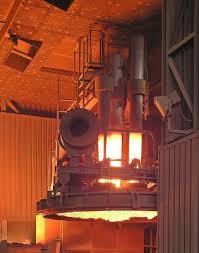
2) Removal of carbon, sulfur or nitrogen
After the material is melted, it will be transferred to the AOD stage - (Argon Oxygen Decarburization). This is the stage of reducing the carbon content to a certain level by adding an oxy-argon mixture and adding some alloying elements. The mixture rich in iron and low alloy ratio will melt in the arc furnace. Nickel, molybdenum, ferrochrome are also added in this stage.
3) Adjusting the temperature and composition of stainless steel - stainless steel
This is the final step of adjusting the chemical composition of the material. The proportion of the components, more or less, the properties of the material will depend on this stage. Stainless steel - Stainless steel is removed from impurities and the temperature and chemistry of the material are accurately homogenized.
4) Casting the slabs or ingots
The material is now in liquid form and is transferred to the casting area to become a slab of a specific size.
HOT ROLLING - COLD ROLLING OF STAINLESS STEEL - STAINLESS STEEL
Using raw materials that are already semi-finished products such as plates, flowers, steel billets or slabs to process metal occurs at temperatures above the recrystallization temperature of the material is called hot rolling. At this stage, the deformed grains recrystallize and maintain a stable structure for grains of similar size. This helps the steel not to harden. Some of these raw materials are further processed to reduce the thickness of the plate or drawn into tubes or stainless steel wires called cold rolling. With the help of machines with working shafts of small or very small diameters, suitable for cold rolling of stainless steel - stainless steel sheets into products of various sizes.

Annealing - Pickling stainless steel - stainless steel
This stage helps restore the material properties after cold rolling. By heat treatment to stabilize the steel crystal structures that have been deformed or displaced during the rolling process. Then, the product is passed through a mixture of cleaning acids and cleaned with high pressure water to remove rust stains. This stage helps remove product defects, and creates a product with perfect physical properties. In addition, this step also helps create a thin protective layer (Chromium Oxide) for the product.
Finishing stainless steel - stainless steel

After the above stages, stainless steel is cut into specific and diverse shapes, suitable for many different applications in life. This step is performed by mechanical cutting techniques and some specialized tools. It can be cut into sheets with different widths according to standards. Some manufacturers also cut according to pre-ordered square or rectangular sizes. Normally, stainless steel sheets will be protected by sticking a plastic film on the top surface of the steel to avoid scratches during transportation to customers. The finishing stage is the stage that highlights the aesthetics of stainless steel. This step is very important and indispensable in the production of stainless steel, because it affects the flatness, smoothness, and ease of cleaning of the product. In particular, this is a prerequisite for products in areas that require attention to hygiene (medical supplies, kitchens, etc.).


